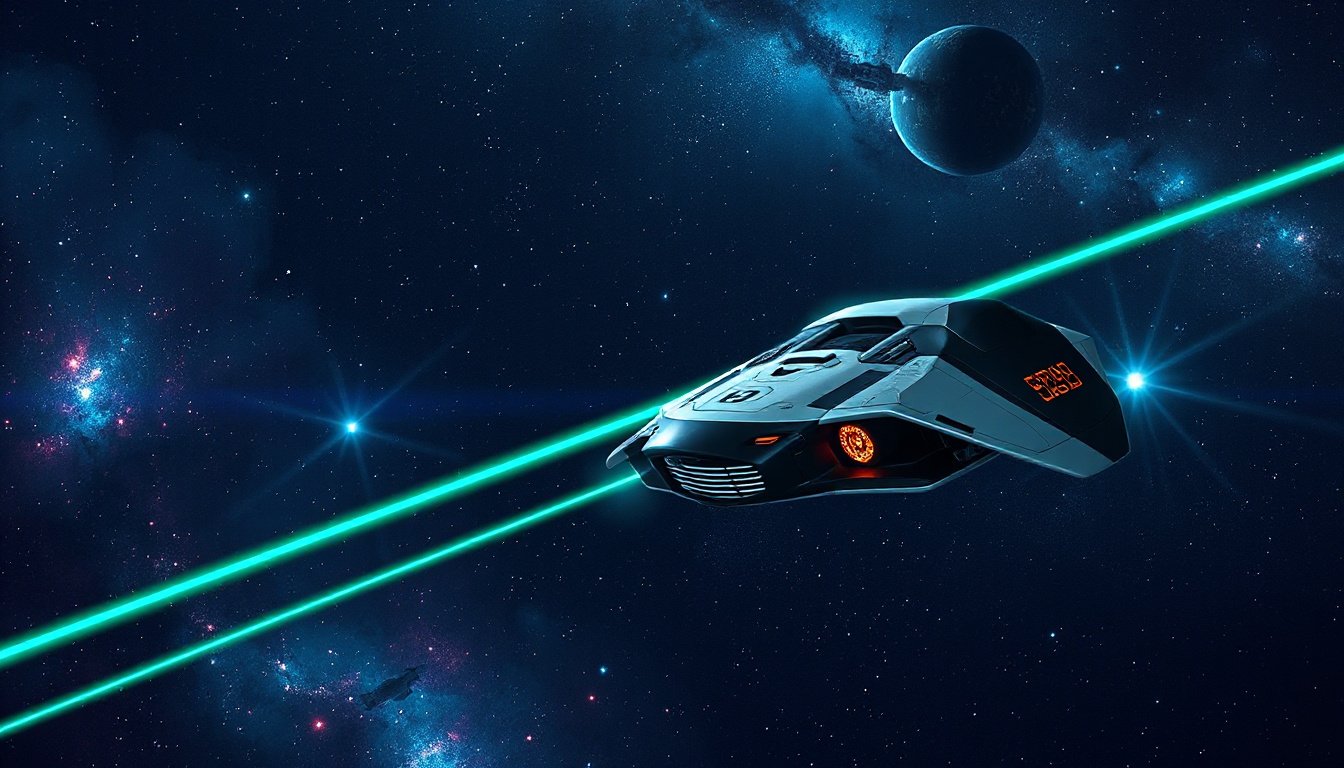
In the quest for enhanced connectivity and data transmission in space, laser communication in spacecraft is leading the charge. This cutting-edge technology promises to revolutionise how we communicate between Earth and space. As spacecraft become more sophisticated and the volume of data generated increases, traditional radio methods are falling short. Let’s explore how laser communication is set to transform spacecraft technology, offering higher speeds, improved efficiency, and a myriad of applications.
Grab your RavenCrest tactical kit here

Key Takeaways
- Laser communication significantly enhances data transmission rates for spacecraft.
- It offers advantages such as reduced weight and improved security compared to traditional radio methods.
- Current missions are already leveraging laser communication to transmit large data volumes more efficiently.
- Challenges like atmospheric interference and alignment precision must be addressed for improved implementation.
- The future of laser communication technology is promising, with ongoing innovations set to transform space communication.
Introduction to Laser Communication in Spacecraft
Laser communication in spacecraft represents a significant advancement in the realm of space exploration and satellite communication. Unlike traditional radio frequency methods, which are limited by bandwidth and range, laser communication utilises light to transmit data. This method allows for a much higher data transmission capacity, enabling spacecraft to send vast amounts of information back to Earth at remarkable speeds. Early implementations have demonstrated that laser communication systems can achieve data rates exceeding 1 Gbps, paving the way for future missions that require quick and efficient transmission of large datasets, such as high-resolution images and real-time telemetry.
Advantages of Laser Communication over Traditional Radio Methods
Laser communication in spacecraft offers a plethora of advantages over traditional radio methods, fundamentally enhancing data transmission capabilities. First and foremost, laser communications provide significantly higher bandwidth. This increased capacity allows for the transfer of large amounts of data at much faster rates, making it an ideal choice for missions requiring extensive data analysis or high-resolution imagery. Moreover, lasers can transmit signals over long distances with minimal loss of quality, ensuring that information sent from deep space remains clear and intact.
Additionally, laser communication is less susceptible to interference compared to radio waves, which can be affected by atmospheric conditions and other electromagnetic signals. This reliability is crucial for maintaining consistent contact with spacecraft operating in harsh environments. Importantly, the directed nature of laser communication improves security, as laser beams can be tightly focused, making it difficult for outside entities to intercept signals. Overall, these advantages position laser communication as a revolutionary technology poised to transform the way spacecraft communicate across vast distances.
‘The future is not some place we are going to, but one we are creating. The paths to it are not found but made.’ – John Schaar
Grab your RavenCrest tactical kit here

Applications of Laser Communication in Current Space Missions
As space missions increasingly rely on advanced technologies, laser communication in spacecraft has emerged as a pivotal component for efficient data transmission. The application of laser communication systems allows spacecraft to send and receive data at unprecedented speeds—up to 10 to 100 times faster than traditional radio frequency methods. This enhanced capability plays a crucial role in missions such as NASA’s Laser Communications Relay Demonstration (LCRD), which aims to test the viability of laser communications for future exploration missions. Additionally, the data-rich environments of Mars missions, like the Mars 2020 Perseverance rover, benefit from high-data-rate laser systems to transmit extensive scientific information back to Earth. By leveraging optical links, these missions can improve bandwidth efficiency and reduce communication delays, ensuring that crucial information is relayed promptly and accurately. As this technology continues to evolve, its integration into upcoming missions is expected to revolutionise how we communicate beyond our planet.
Challenges and Limitations of Implementing Laser Communication
Implementing laser communication in spacecraft presents a unique set of challenges and limitations, primarily due to the technology’s inherent requirements and the unpredictable nature of space environments. One significant challenge is the need for precise alignment between the transmitting and receiving units; even minor misalignments can result in significant signal loss. Additionally, atmospheric conditions can interfere with laser signals, especially when transmitting from the Earth’s surface. While ground stations can rely on fibre optics and radio waves, space-based laser systems must account for the vast distances involved, requiring robust error-correction protocols to maintain data integrity. Furthermore, the current cost and complexity of deploying and maintaining advanced laser terminals hinder widespread adoption in missions. As space agencies and private enterprises seek to improve communication bandwidth and security, overcoming these obstacles will be crucial to fully realising the potential of laser communication in spacecraft.

Future Prospects and Innovations in Laser Communication Technology
The future of laser communication in spacecraft is brimming with potential as engineers and scientists work on innovations that will dramatically enhance data transfer capabilities. One prominent prospect is the development of quantum key distribution (QKD) for securing communications in space environments, addressing the increasing concern over cybersecurity. Enhanced communication bandwidths, potentially reaching terabits per second, are achievable through advanced laser technologies, allowing for real-time data transmission from distant missions such as Mars rovers to Earth. Moreover, advancements in lightweight optics and miniaturised laser systems promise to integrate more sophisticated communication tools in compact satellite designs. The pursuit of more efficient, reliable, and faster laser systems could redefine how interplanetary missions communicate, paving the way for improved remote scientific collaboration and data sharing on a scale we have yet to experience.
Frequently Asked Questions
What is laser communication in spacecraft?
Laser communication in spacecraft refers to the use of laser beams for transmitting data between spacecraft and ground stations or between spacecraft themselves. This technology allows for higher data rates and improved signal quality compared to traditional radio frequency communication.
What are the advantages of laser communication over traditional radio methods?
Laser communication offers several advantages, including significantly higher data transmission rates, reduced power consumption, smaller antenna sizes, and enhanced resistance to interference. This allows spacecraft to send larger amounts of data quickly and efficiently.
What current space missions are utilizing laser communication technology?
Current space missions using laser communication include NASA’s Laser Communications Relay Demonstration (LCRD) and the European Space Agency’s (ESA) European Data Relay System (EDRS). These missions aim to test and implement laser communication systems to enhance data transmission capabilities.
What are the challenges and limitations of implementing laser communication in spacecraft?
Challenges include the need for precise alignment of laser beams, potential atmospheric interference, and the complexity of developing compatible technology for various spacecraft. Additionally, the cost and integration of laser communication systems can also present limitations.
What does the future hold for laser communication technology in spacecraft?
The future of laser communication in spacecraft is promising, with ongoing research and development aiming to overcome existing challenges. Innovations may lead to even higher data rates, longer transmission distances, and more robust systems that could revolutionize how spacecraft communicate and share data.
Tech Aether is your go-to source for in-depth reviews, tutorials, and news on cutting-edge military and space technology. Some of the links in this article are affiliate links, which means we may earn a small commission at no extra cost to you—your support helps keep the lights on (and the rockets fueled!). Want more? Subscribe to our newsletter for weekly deep dives and catch our latest videos on YouTube.