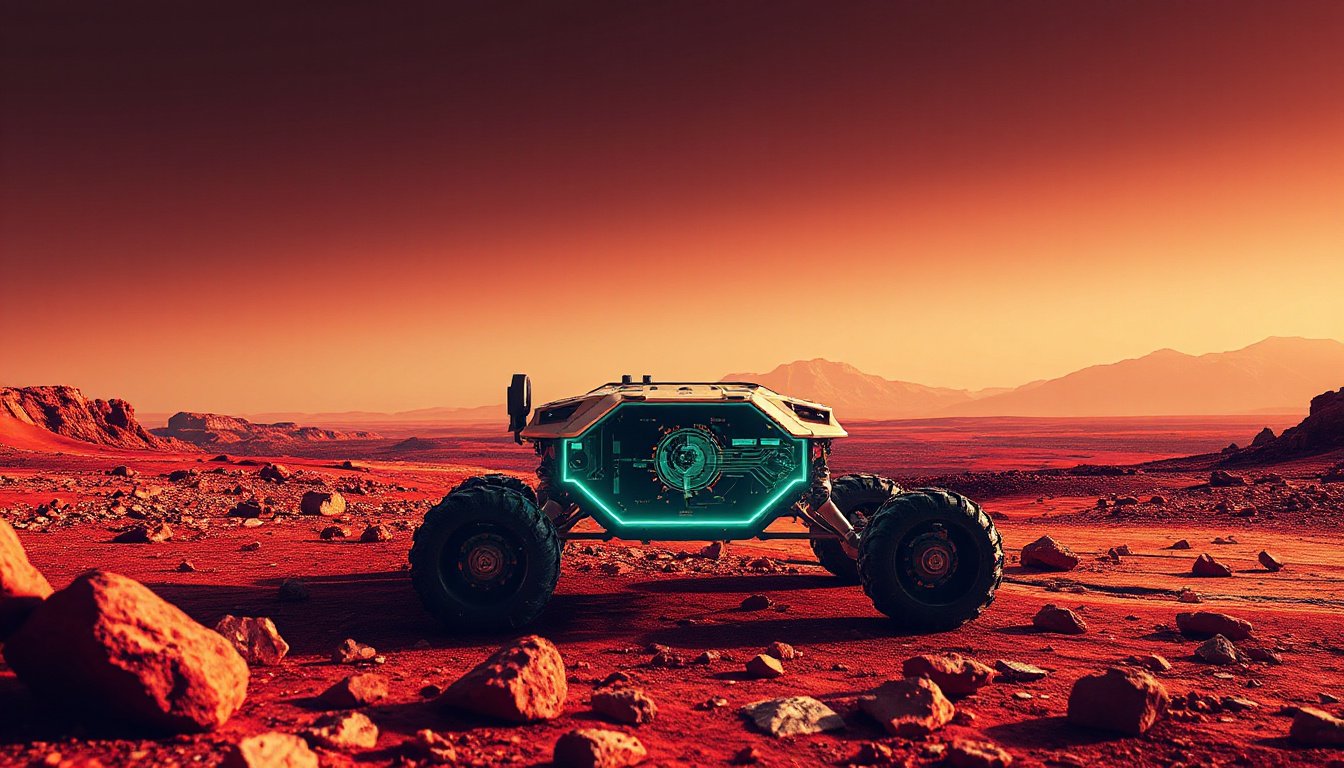
Exploring the vast expanse of Mars has captivated scientists and enthusiasts alike, making advancements in Mars Rover AI Navigation crucial for future missions. As we push the boundaries of space exploration, the integration of AI technology into Mars rovers plays a pivotal role in ensuring successful navigation and data collection on the Martian surface. In this article, we will delve into the development of Mars rover missions, the transformative role of AI in navigation, the key technologies that power these systems, notable case studies of successful missions, and the promising future of AI in furthering our knowledge of space.
Grab your RavenCrest tactical kit here
 Grab your RavenCrest tactical kit here

Key Technologies Behind AI Navigation Systems
The development of Mars Rover AI navigation systems has dramatically transformed the way we explore the red planet. Central to these innovations are several key technologies that enable these rovers to operate autonomously in an unpredictable environment. One of the most crucial components is the use of advanced machine learning algorithms, allowing the rovers to learn from their surroundings and adapt to new challenges. Additionally, high-resolution cameras and LiDAR sensors provide real-time data, creating detailed maps of the terrain. This data is processed by on-board computers that make navigation decisions without human input, greatly improving the efficiency and safety of missions. Altogether, these technologies not only enhance the capabilities of rovers on Mars but also pave the way for future interplanetary exploration.
Case Studies: Successful Mars Rover Missions Using AI
The advancements in Mars Rover AI Navigation have been pivotal in the success of various Mars exploration missions. A prime example is NASA’s Curiosity rover, which utilized sophisticated AI algorithms to navigate the Martian terrain autonomously. Curiosity’s onboard software allowed it to analyze numerous images in real-time, identifying safe paths and potential obstacles without direct human intervention. Another impressive showcase of this technology is the Perseverance rover, which is equipped with advanced AI systems that enhance its decision-making capabilities. During its mission, Perseverance effectively adapted to unforeseen challenges by leveraging AI to determine the best routes and prioritize scientific tasks. These case studies highlight that Mars Rover AI Navigation not only increases the efficiency of missions but also helps in achieving scientific goals by allowing rovers to make critical navigation choices independently.

Future Prospects of AI in Space Exploration
As the pace of space exploration advances, one of the most promising areas of technology lies in Mars rover AI navigation. The integration of artificial intelligence not only enhances the rovers’ ability to traverse the Martian landscape autonomously but also optimizes decision-making processes in real-time. With sophisticated algorithms, AI systems can analyze terrain data, identify obstacles, and plan efficient routes—all crucial for the success of missions where remote control from Earth is often delayed. Moreover, future prospects include improved learning capabilities from past missions, enabling AI systems to adapt and evolve, making Mars exploration more efficient and leading to groundbreaking discoveries.
Frequently Asked Questions
What is Mars Rover AI navigation?
Mars Rover AI navigation refers to the use of artificial intelligence technologies to enhance the navigation capabilities of rovers on Mars, allowing them to autonomously plan paths and make real-time decisions about traversing the Martian terrain.
How is AI improving Mars Rover missions?
AI improves Mars Rover missions by enabling rovers to analyze their environment, avoid obstacles, and choose optimal paths without requiring constant input from Earth, thus increasing efficiency and productivity during missions.
What key technologies are used in Mars Rover AI navigation systems?
Key technologies in Mars Rover AI navigation include machine learning algorithms, computer vision for obstacle recognition, sensor fusion for environmental awareness, and decision-making systems that allow rovers to react autonomously to dynamic conditions.
Can you provide examples of successful Mars Rover missions that utilized AI navigation?
Yes, notable examples include the Mars Curiosity Rover and the Perseverance Rover, both of which utilize AI navigation systems to successfully navigate the Martian surface, analyze samples, and conduct scientific experiments.
What are the future prospects for AI in space exploration beyond Mars?
The future prospects for AI in space exploration include improved autonomous navigation for future missions to the Moon, asteroids, and beyond, potentially allowing for deep space exploration missions where real-time communication with Earth is not feasible.
Tech Aether is your go-to source for in-depth reviews, tutorials, and news on cutting-edge military and space technology. Some of the links in this article are affiliate links, which means we may earn a small commission at no extra cost to you—your support helps keep the lights on (and the rockets fueled!). Want more? Subscribe to our newsletter for weekly deep dives and catch our latest videos on YouTube.